
ANCIENT WHEAT. WHEN TRADITION MEANS REVOLUTION
The “Montebello” Cooperative
This is where Girolomoni’s organic pasta is made
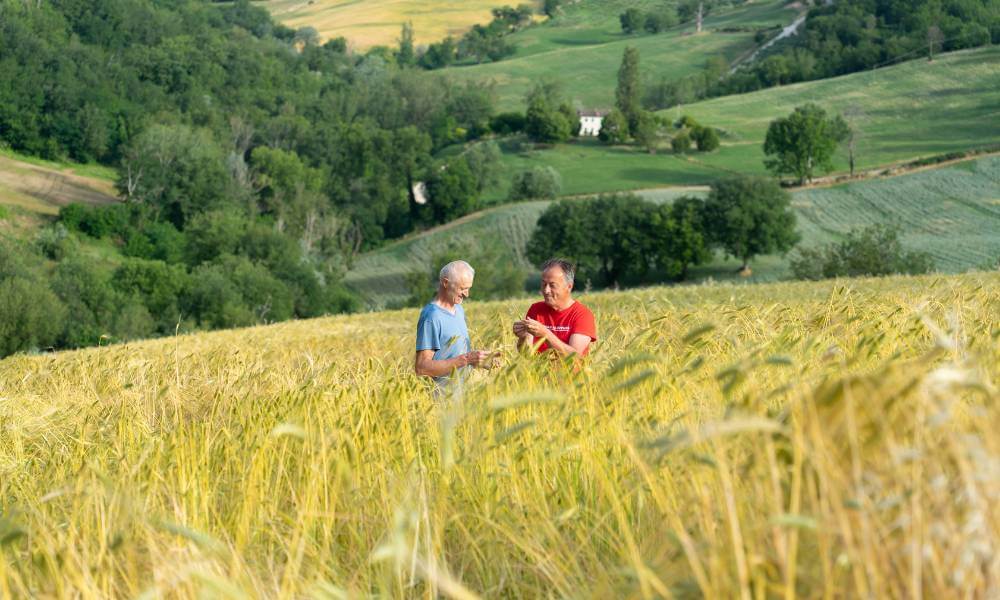
Member and affiliated farms working together for the organic cause
Durum wheat and ancient wheat varieties with a short and organic supply chain, used to make Girolomoni pasta
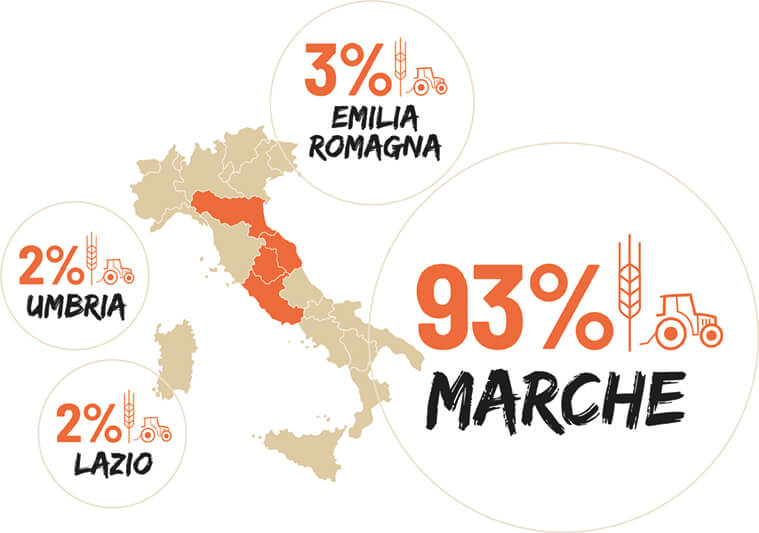
Currently, about 400 farms in Italy are involved in the organic supply chain of our pasta. More than 70% of these are in the Marche.
Cooperativa Montebello is part of the Girolomoni Ecosystem and is tasked with the management, support, and organisation of that part of the integrated supply chain that goes from seed to the mill.
Cooperativa Montebello also offers other services to farmers, including associated management of crops that are rotated with durum wheat and other grain. A few examples of these organic crops are chick peas, field beans, lentils, sunflowers, and feeds. Crop rotation is the first step in agroecological management of farms, where a sequence of crops is grown in place of monoculture.
The companies in the organic farming supply chain
Cutting edge
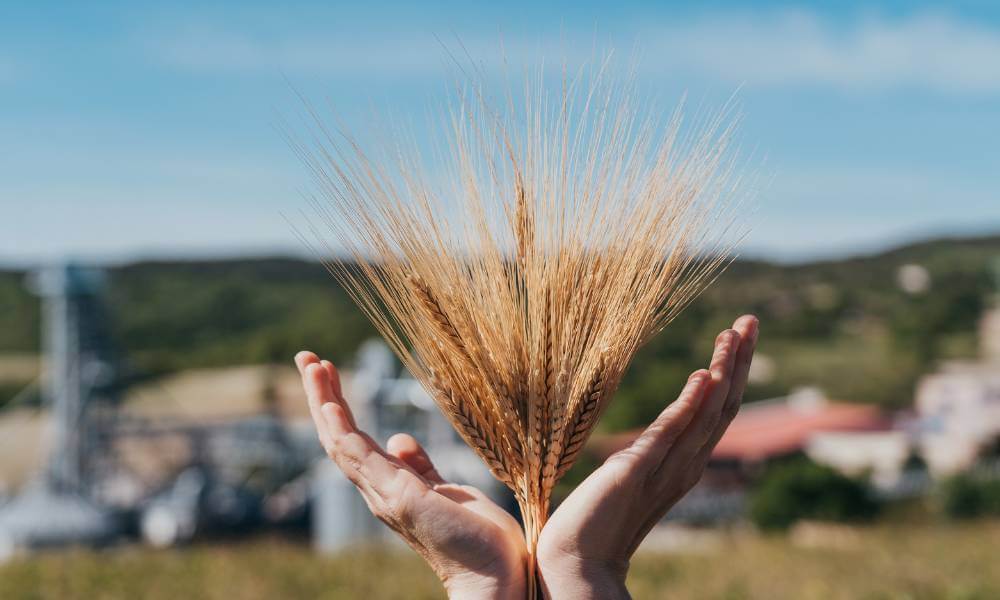
Working with the Polytechnic University of the Marche, Research Institutes and national and international bodies, we are promoting innovation in culture and technology. We set up Biocereals 4.0, a project dedicated to the development of organic farming, guiding every technological transition for our farms. We want to support them as they gradually implement the principles of precision agriculture, as well as through the digitalisation of the supply chain.
The Vision of Cooperativa Montebello
A rural community at the forefront of organic agriculture, at the root of the Girolomoni supply chain
The Mission of Cooperativa Montebello
To create a supply chain for pasta and pasta for the supply chain
For the Cooperative, this translates as a constant commitment to the whole organic pasta supply chain.
- We distribute the added value generated by the sale of finished products by reinvesting in all stages of the supply chain: infrastructure, services for farmers, training and innovation, in accordance with our articles of association, as we are a predominantly mutual cooperative*.
- We boost collaboration and interaction with Universities, Research Institutes and national and international Entities dedicated to the development of organic farming in Italy and all over the world.
- We support the technological transition dof the our associated farms, both by gradually implementing the principles of precision agriculture, as well as through the digitalisation of the supply chain.
Ancient wheat types are varieties grown before the use of synthetic chemistry in farming. The industrialisation of production techniques has caused a shift in the selection and choice of wheat towards those varieties best suited to conventional agriculture, where the priority is productivity and grain resistance to high processing temperatures.
Through the Montebello Cooperative and our organic farmers, we have focused on reviving so-called ‘ancient grains’ for three reasons:
- Because they are grains that can adapt to the more difficult climates of marginal agricultural areas and do not need particular support.
- Because these varieties have contributed to the development of a sustainable supply line, including in economic terms, with greater added value from their production and even a more marked characterisation compared to the generic, indistinguishable cereal grown for the food industry.
- Because they enrich our diets with more varied and balanced meals and promote biodiversity, counteracting the genetic erosion of crop species in the field.
This is why ancient wheat varieties such as Graziella Ra, Senatore Cappelli and Spelt (Triticum Dicoccum) – grown by the organic farms in Cooperativa Montebello – are types of grain that show us every aspect of biodiversity: taste, aroma and colour.
NEW SEEDS FOR ORGANIC GROWING
Together with partners from Italy and Europe, we are members of the SEMINARE IL FUTURO foundation, created to select seed suited to organic agriculture and climate change conditions, using natural methods.
“The countryside is Italian identity in a physical form; it expresses the way we use our limited vital resources in an area – water, air, plants and food – together with our ability to look after the land and the health of its fruits, representing the state of freedom of our people”.
From “Viaggio intorno al Mediterraneo di Gino Girolomoni”

Request information
To get in touch with our agronomists and request information about our supply chain, please complete the form.