
Our pasta completes a journey before it reaches your table. It’s good because we know where and how the wheat is grown, we mill it and we know every part of it. Then we mix it and dry it intelligently and thoroughly, using the technology we have brought in. It is the result of continued dialogue among farmers, millers and pasta makers for bespoke recipes for our pasta.
From field to the pasta
How Girolomoni organic pasta is made
We built our organic production method step by step, from the time that Gino and Tullia moved to Montebello, into the Ecosystem you see today. A lengthy process that has taken years, but one that has built up the entire supply chain dedicated to Girolomoni pasta, of which we are proud.
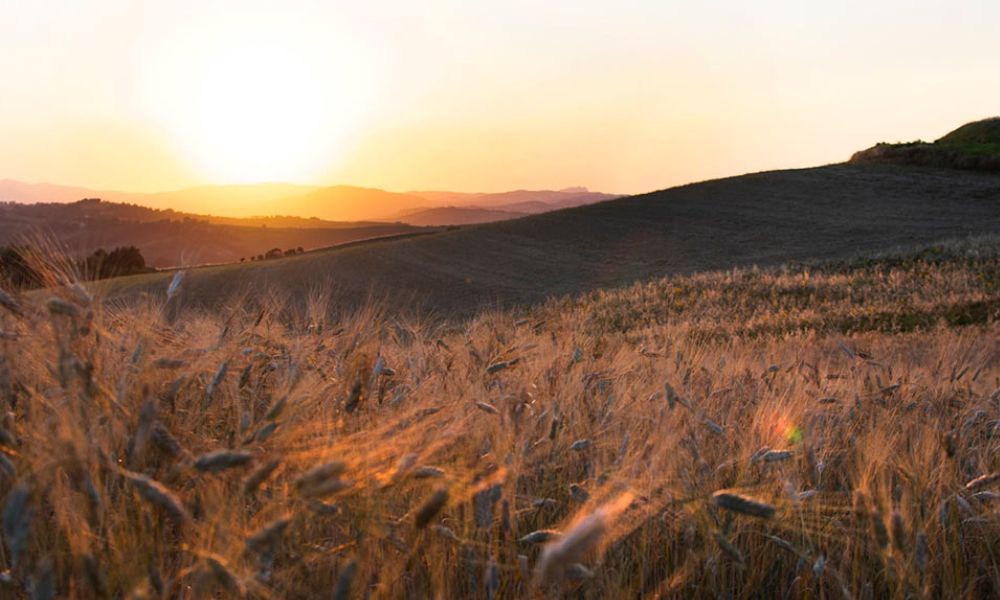
From organic wheat to great Girolomoni pasta
1. The origin of the wheat
Quality Control
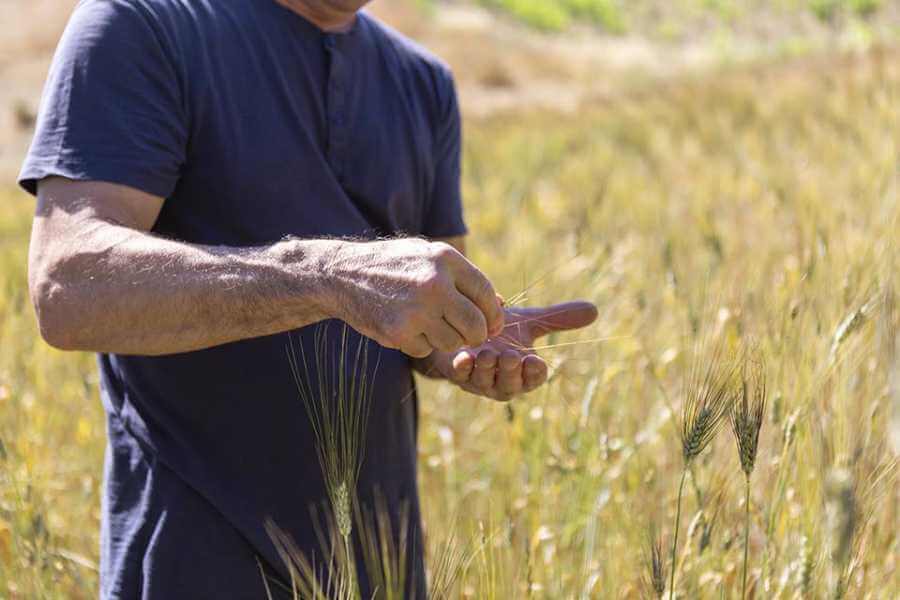
Over time, every farm is supervised by the same agronomist, a process which creates a relationship of trust. The agronomist advises and checks the correctness of the growing process.
- Assess the yield according to sowing plans;
- Assess the general state of the fields;
- takes a sample from the ears of maize as they ripen to rule out the presence of plant protection products;
- check the rotation process.
All this to guarantee quality to the consumer and the whole supply chain.
The process
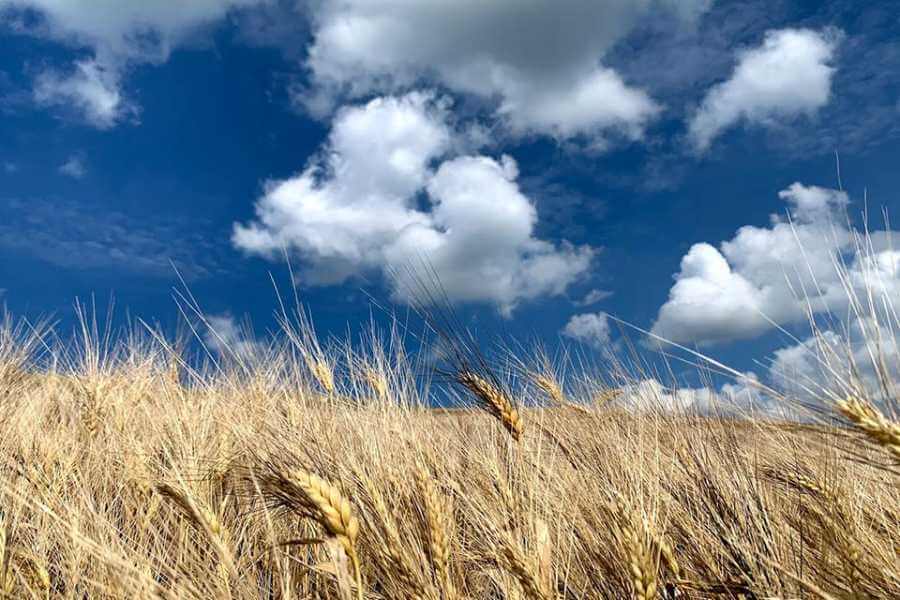
The journey begins with organic wheat from our supply chain. The wheat we use to make the pasta is all from farms that are members or associates, mainly in central Italy and over 90% of which are in the Marche.
2. Harvest and storage
Quality Control
All storage centres are checked before harvest and distribution to make sure they are the right quality; subsequently they are monitored throughout the year to monitor correct storage.
The process
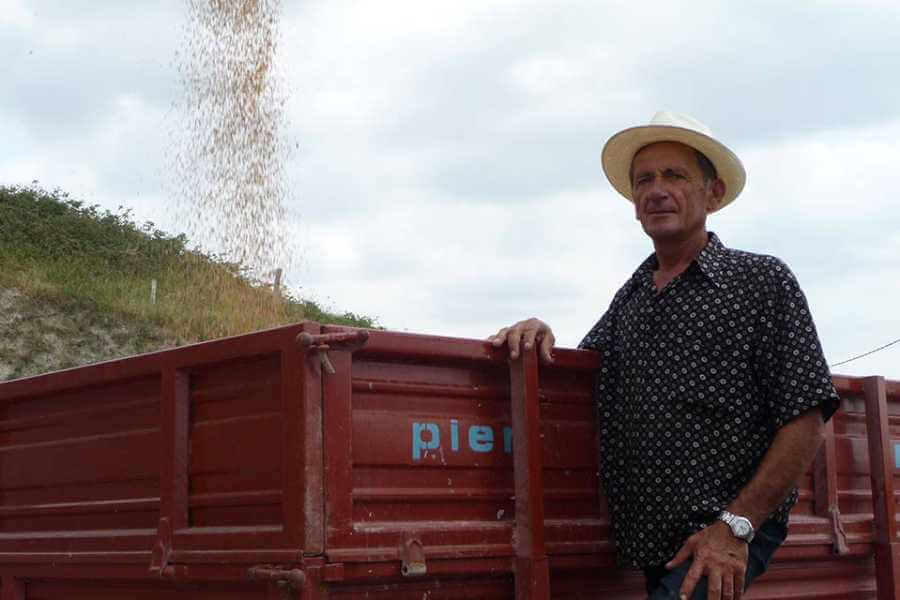
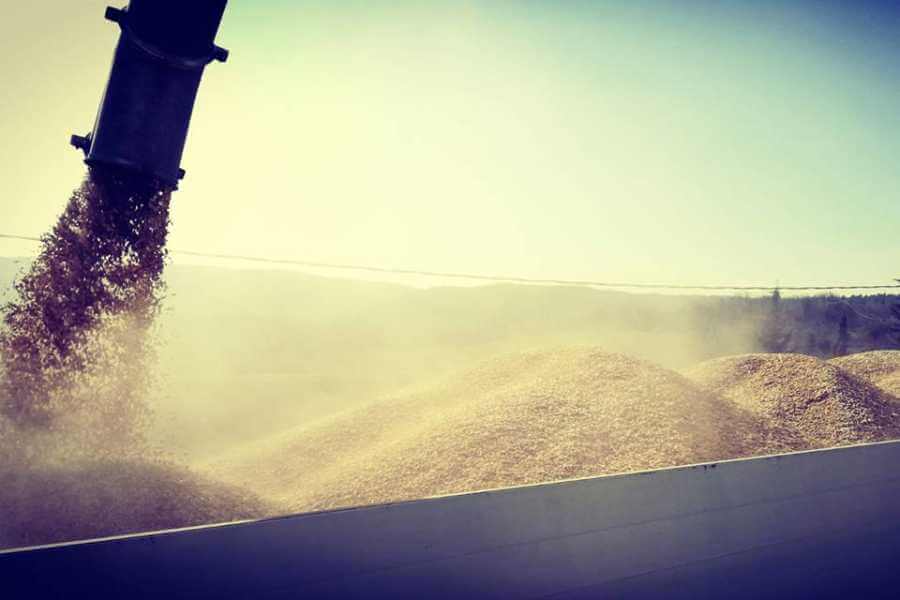
When the time is right – between June and late July – our farmers start with threshing, depending on the pedoclimatic conditions of the land. Once the wheat has been harvested, it continues its journey to the nearest storage centre.
3. From wheat to pasta
Quality Control
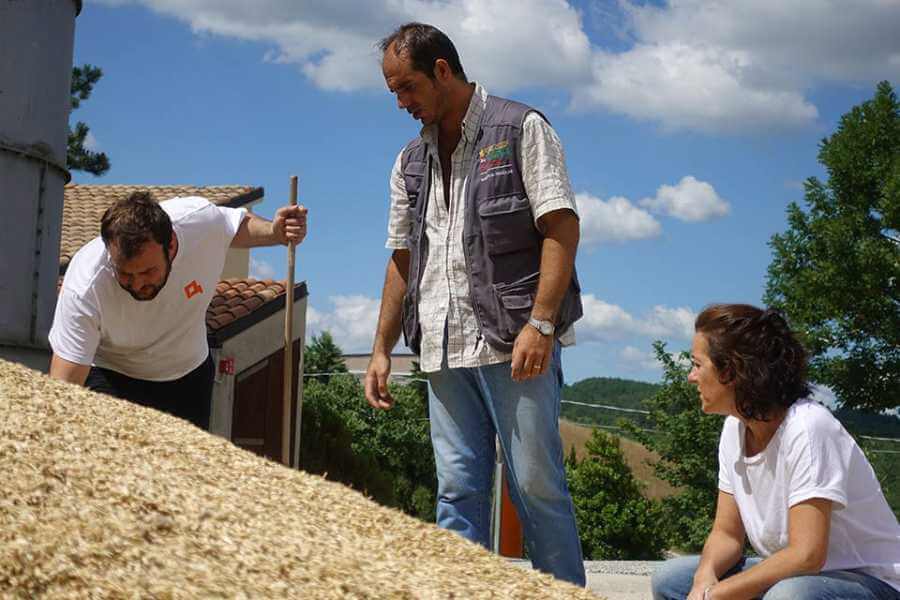
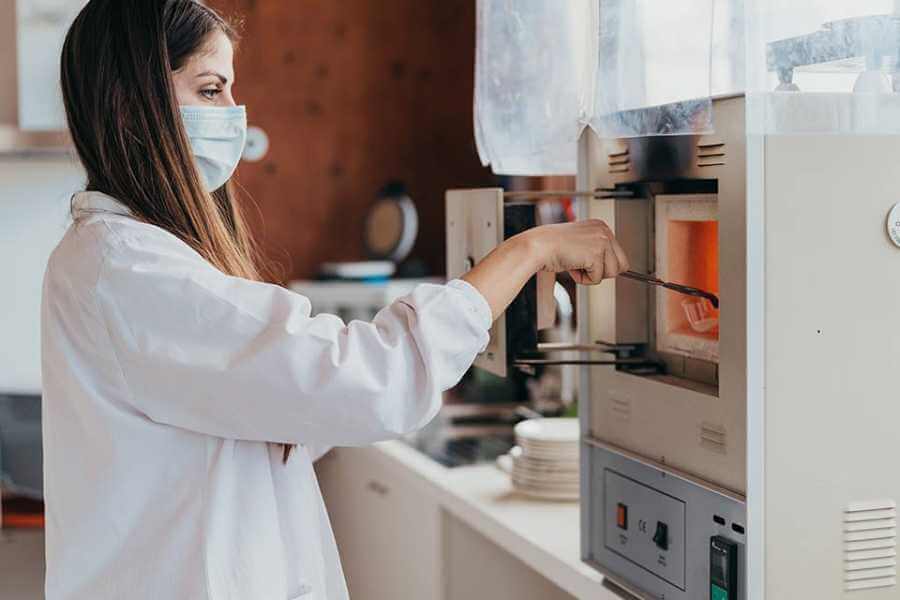
Before we grind the wheat, it is thoroughly tested:
- At external laboratories with ACCREDIA accreditation to make sure there are no pesticides or plant protection products, or heavy metals, all of which requires highly specialised instruments.
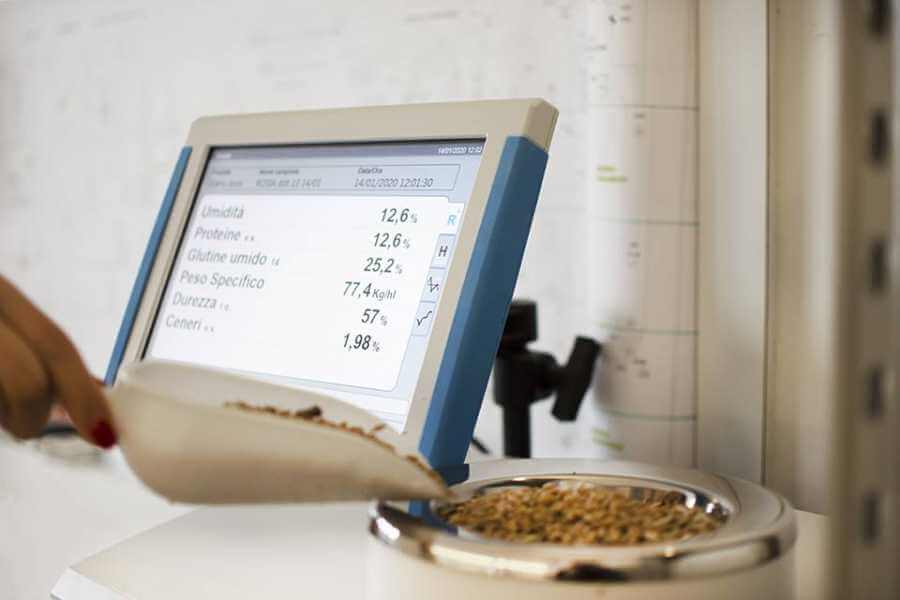
- In house to check proteins, specific weight, moisture and ash content, impurities and microtoxins. Checking the proteins allows us to create mixes that will calibrate the harvests and create a pasta that remains good over time.
The process
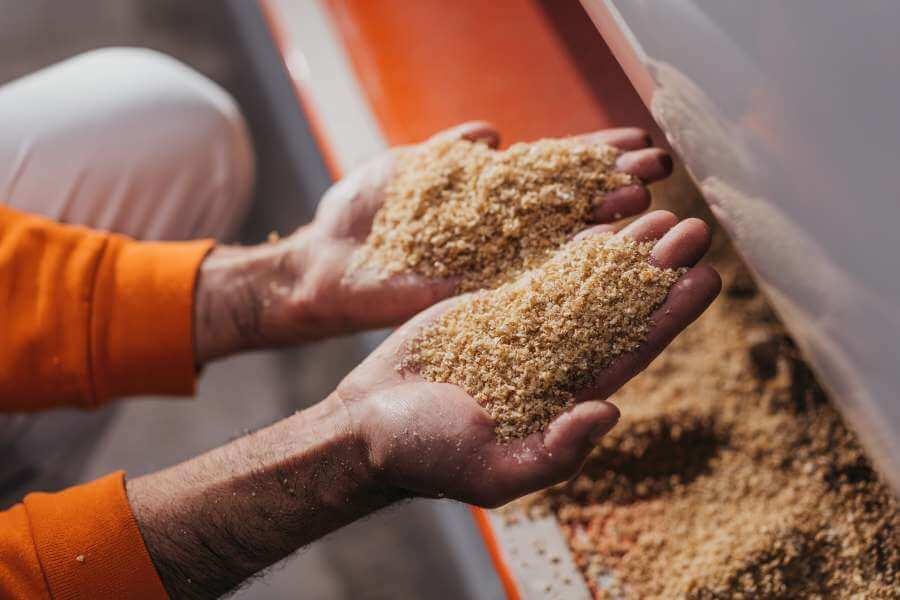
The wheat for our organic pasts arrives at the Mill, ready to be ground into semolina.
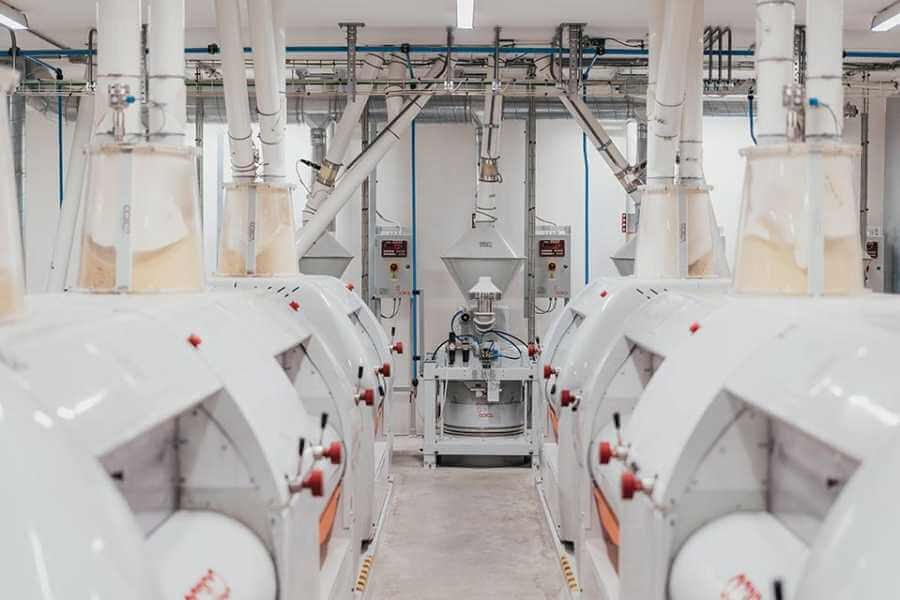
We built our mill in 2019, alongside our pasta factory on the Montebello hill, the crowning point of Gino’s dream. A dream we achieved, that of seeing the pasta supply line brought to completion, with direct management of every stage in the production process.
Ours is a small roller mill, but it uses state-of-the-art technology which:
- Offers precision in the formulation of recipes for bespoke flour
- Does not cause thermal shock during processing
- Cuts waste to a minimum
Quality Control
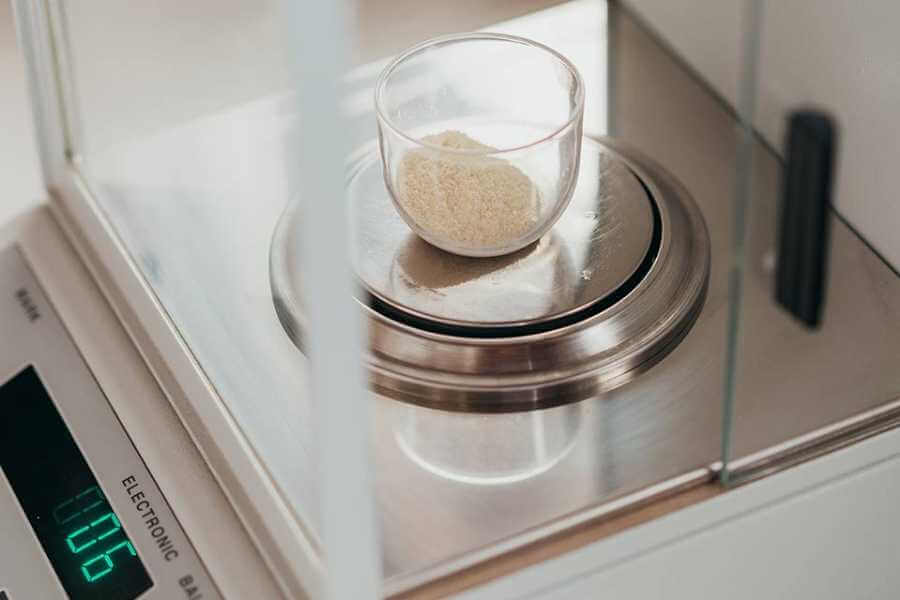
As soon as the mill has finished the grinding process and before using the semolina in the pasta factory, the laboratory carries out an in-house check of moisture, ash, protein, gluten, colour index and grain size.
4. Good pasta
Quality Control
Moisture and temperatures are automatically measured throughout the processing stages, using probes, checked by our pasta makers during the whole process.
Our finished pasta products undergo the following:
- In-house testing of cooking times and thickness
- External microbiological testing
Samples are kept back from every batch for the whole shelf life and others, for all product conformity checks.
The process
The semolina is ready for the last stage in the journey and leaves the Mill, using a special system of pipes that we designed, which we call “the semolina road”, connecting directly to the Pasta factory.
This way, the semolina is uncontaminated on its arrival, without the need for storage or transport, which is why you can smell its intense aroma when you enter the Pasta factory.
Dough
We gently mix the semolina with water from the local mains supply, which is sourced not from industrial facilities but from organically farmed fields and a 2,000-hectare state-owned forest; the water is checked at source to ensure our raw material meets safety standards.
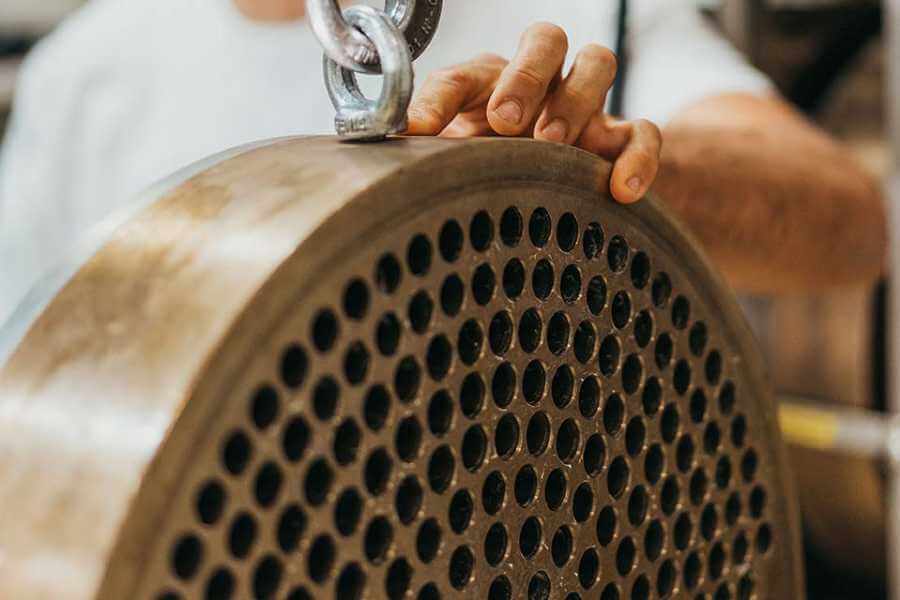
The dough is passed through the dies to give it its shape, porosity and thickness.
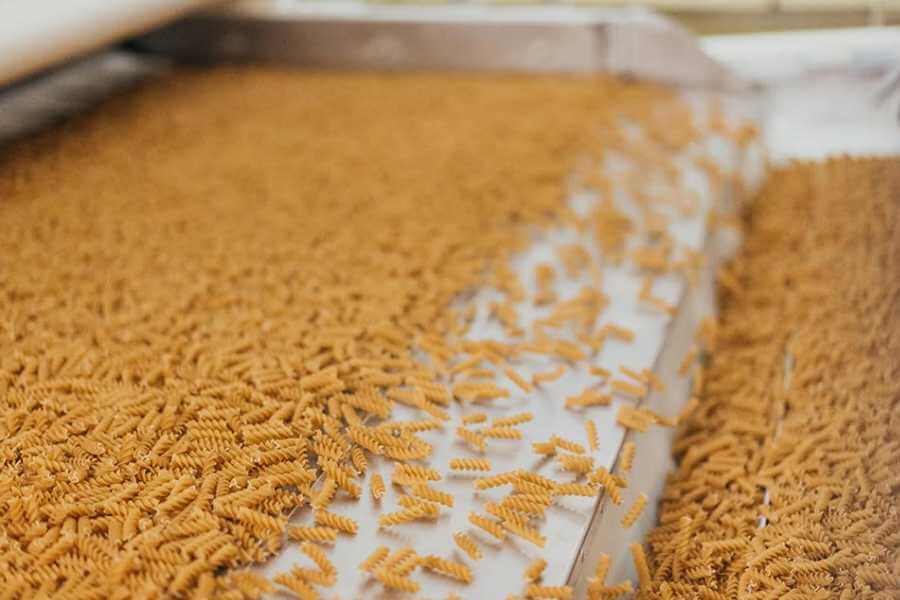
The short formats are placed on belts and transported to the dryer.
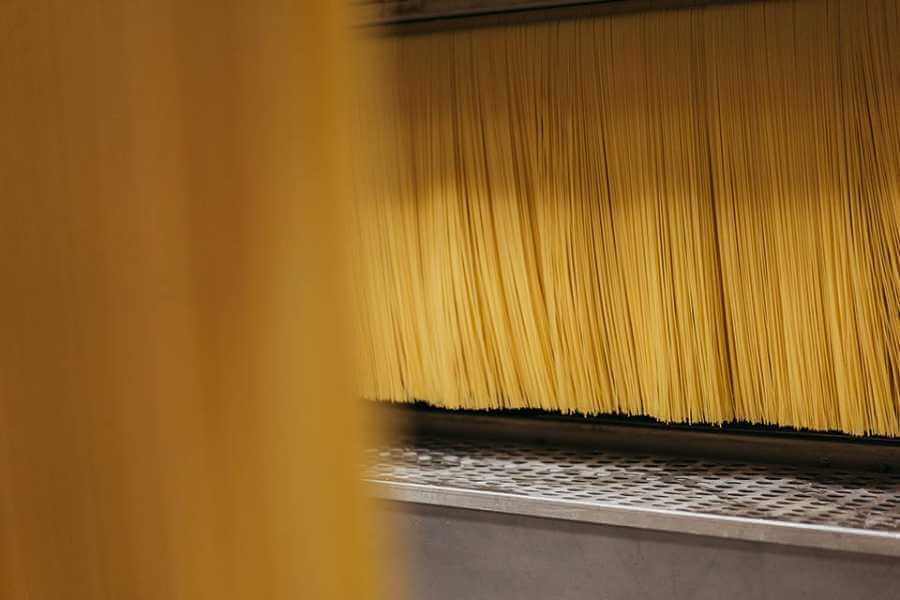
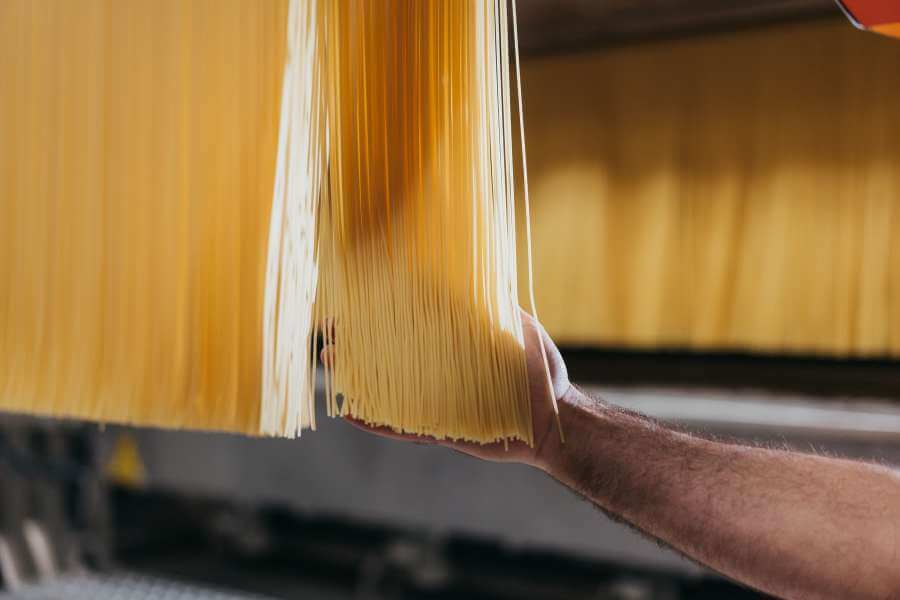
The long pasta that leaves the die is hung from a shelf to complete the drying process, much in like the traditional Italian pasta, which used to be left out in the sun.
Drying
The slow drying process for Girolomoni organic pasta can take between 7 and 12 hours, depending on the shape, at an average temperature of 65 degrees, with the highest temperature applied at the start when the product has the highest moisture content. The pasta is exposed to controlled flows of hot air to evaporate the water from the inside out without cracking the surface.
The heat required for drying is generated by a biomass plant, fuelled by local virgin wood chips.
Finally, the pasta is cooled and stabilised to bring it gradually back to room temperature before packaging and to achieve a moisture content of 12.5 per cent. In this way, we have produced a dry pasta that can be stored for two to three years.
Packaging
During the packaging process, the machines, which are used and guided by people, dress our Girolomoni pasta so that it is ready to reach your home.
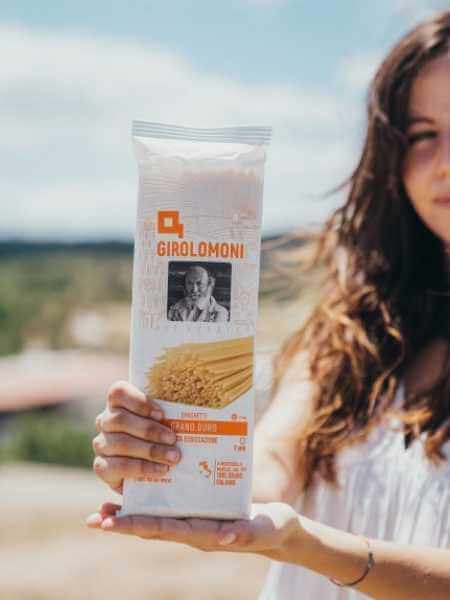
Thanks to the controlled supply chain of our organic pasta, promptly, we can trace every pack back to the field where the wheat used to make it was grown.