
Our statements


The Girolomoni Business Ecosystem
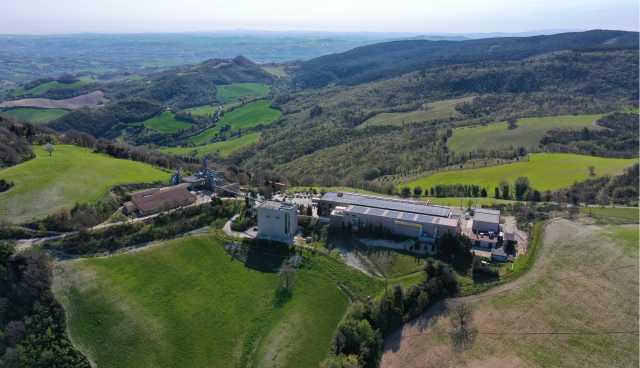
By ‘Girolomoni Ecosystem’ we mean the collection of organisations born out of Gino Girolomoni’s vision and developed on the hillside of Montebello.
These are distinct entities, yet linked by collaboration and interdependence: the agricultural co-operative, which processes cereals and sells finished products; the second co-operative, responsible for the cultivation and harvesting of cereals; the cultural foundation; the accommodation facilities; and the supply chain consortium.
This ecosystem stems from the desire to build an agricultural economy capable of developing a fully organic pasta supply chain, and to revitalise the local area through organic farming, culture and community relations.
To find out more about the organisation and figures relating to the components of the Ecosystem, click the button below.
"Dignity to tha land!"
How is the Cooperative’s vision put into practice?
The history
Gino Girolomoni’s dream was to restore dignity to the land and its guardians, the farmers. In 1971, Gino and Tullia Romani breathed new life into the hills of Montebello, choosing the ancient, then-abandoned monastery as their home.
In 1977, together with other young people from Isola del Piano and a number of local farmers, the Agricultural Cooperative was founded. Following Gino’s death in 2012, the Cooperative has continued its journey with the younger generations.
Today, the Girolomoni project combines organic farming, co-operation, the processing of wheat into pasta and cultural activities. Our supply chain involves around 400 farmers in central Italy, with a strong presence in the Marche region, and over 70 staff members.
Predominantly mutual agricultural co-operative
The general definition of a predominantly mutual co-operative is set out in **Articles 212, 2513 and 2514** of the Civil Code (introduced by the 2003 company law reform).
To put it very simply, we could explain it as follows: being a predominantly mutual agricultural co-operative means that our business is based primarily on the supply of produce from our farmer members.
Furthermore, by law and in accordance with the articles of association, profits are not distributed as they would be in an ordinary company, but are reinvested in the development of the supply chain and also allocated to mutual funds to support the co-operative.
100% Organic
All the cereals processed in our mill and pasta factory are organic, and all our member farms are certified organic.
The entire range of products we sell is also organic.
Fair Trade / WFTO
Since 2023, the Gino Girolomoni Cooperative has been a member of the World Fair Trade Organisation.
This approach is consistent with our history: creating opportunities for organic farming in inland and agricultural areas, combating depopulation and building fairer relationships throughout the supply chain.
60% of the farms that supplied us with cereals for processing in 2025 are located in areas considered to be disadvantaged according to the definition set out in the 2023–2027 CSR.
Biodiversity and organic farming
Regulation (EU) 2018/848 defines organic production as a system based on environmental practices, the protection of natural resources and a high level of biodiversity. For this reason, when we say that organic farming promotes biodiversity and soil fertility, we are referring to the European regulatory framework for organic production.
Over the years, we have also grown and processed cereals other than traditional durum wheat, helping to promote varieties and species such as emmer wheat (since 1991), Khorasan Graziella Ra and Senatore Cappelli (since 2005).